
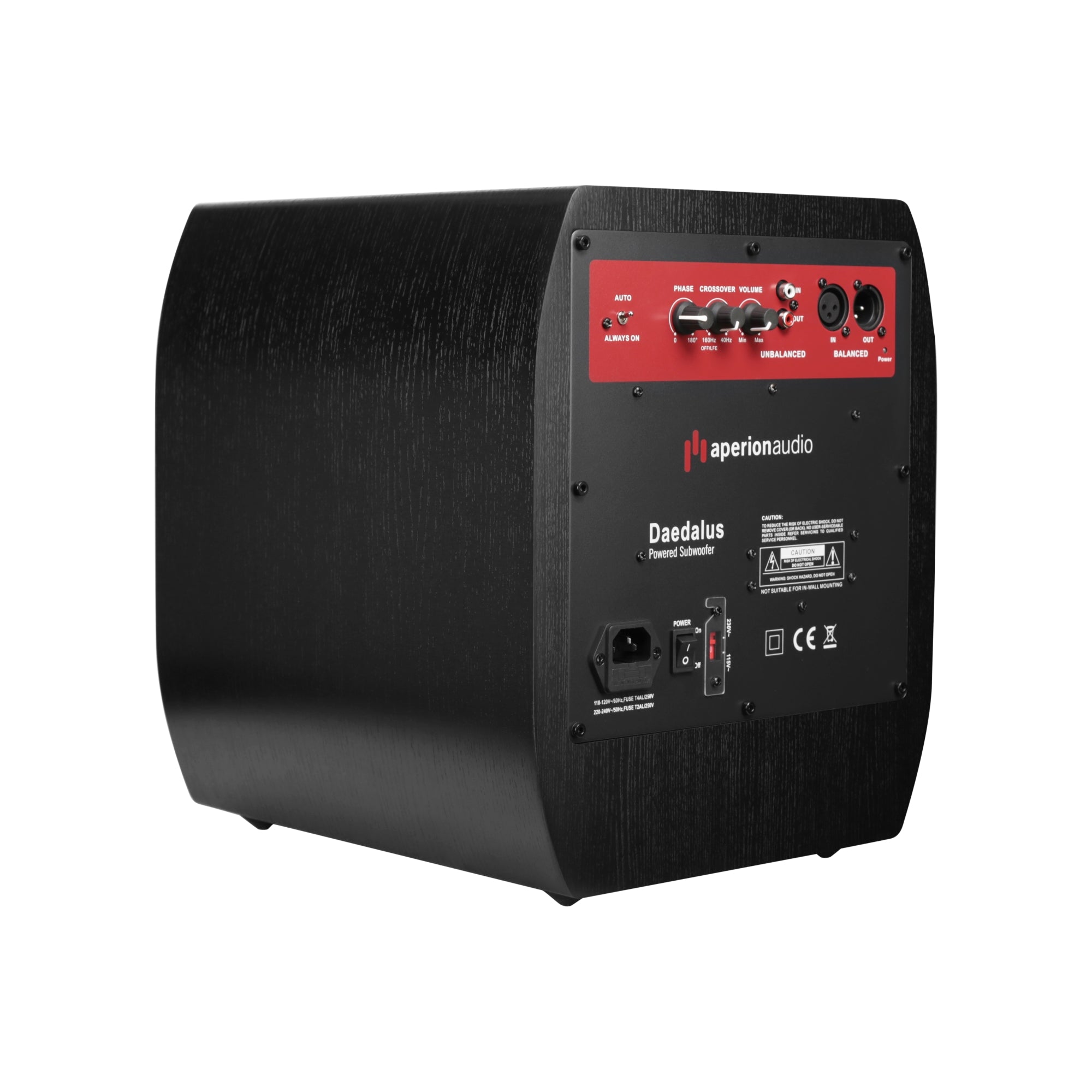
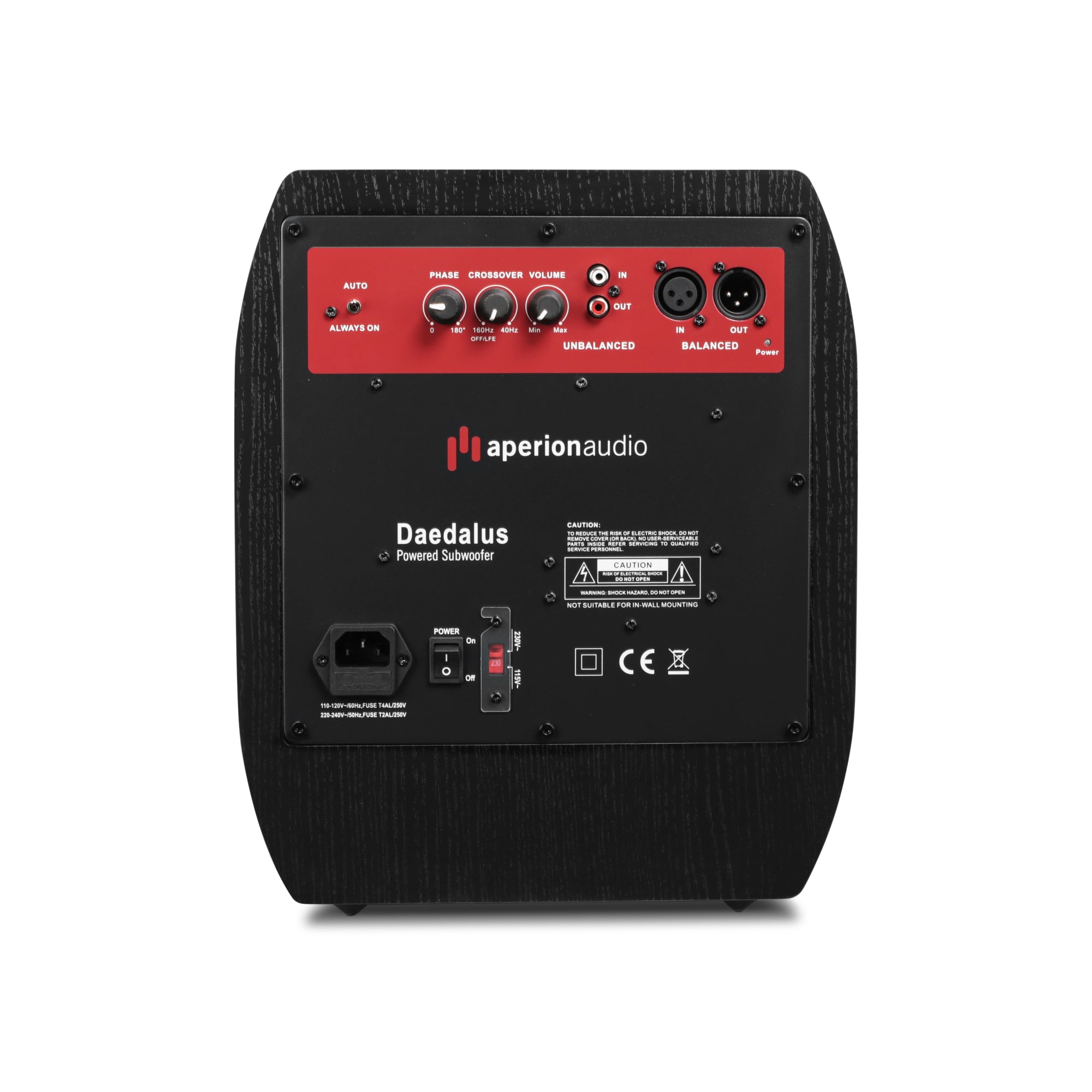
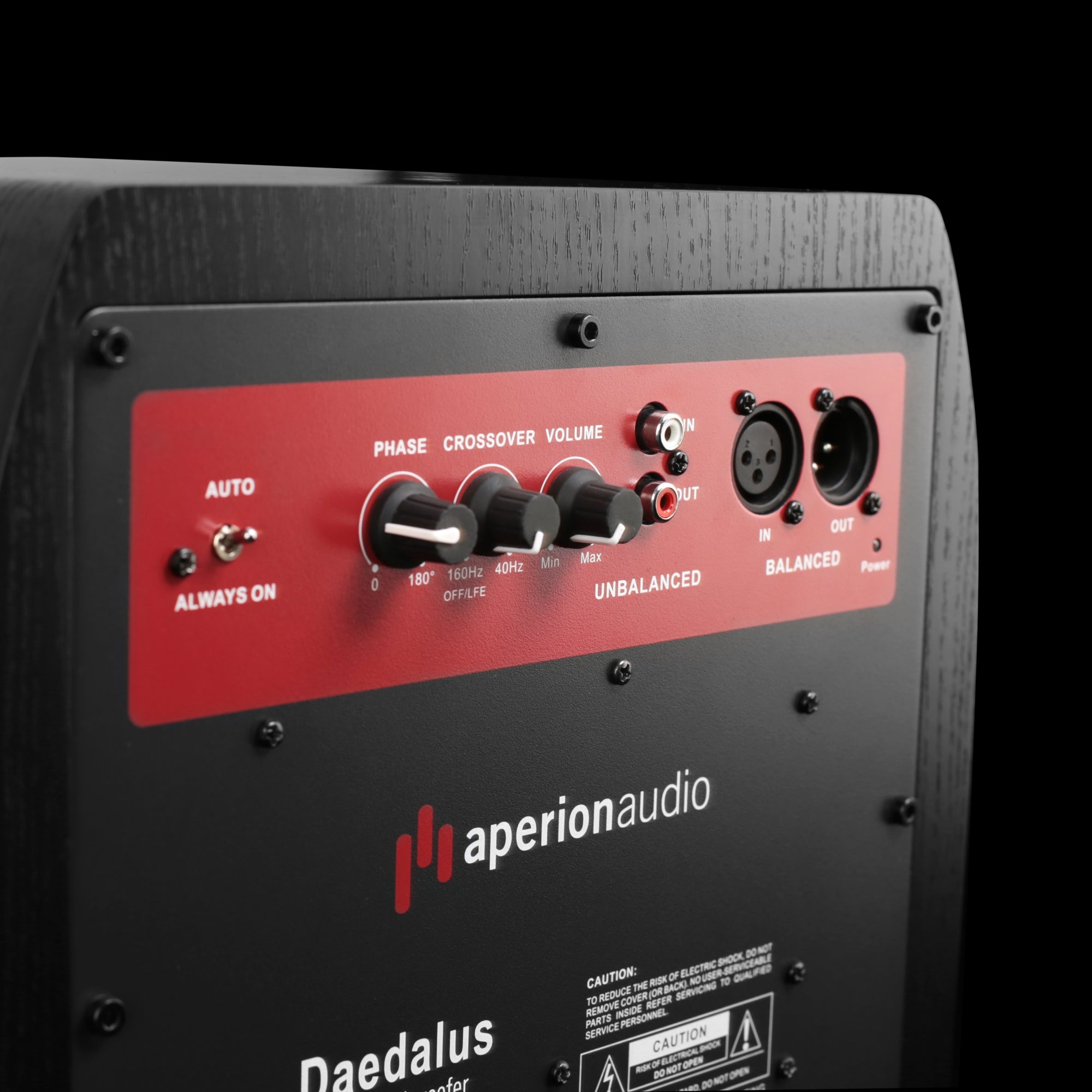




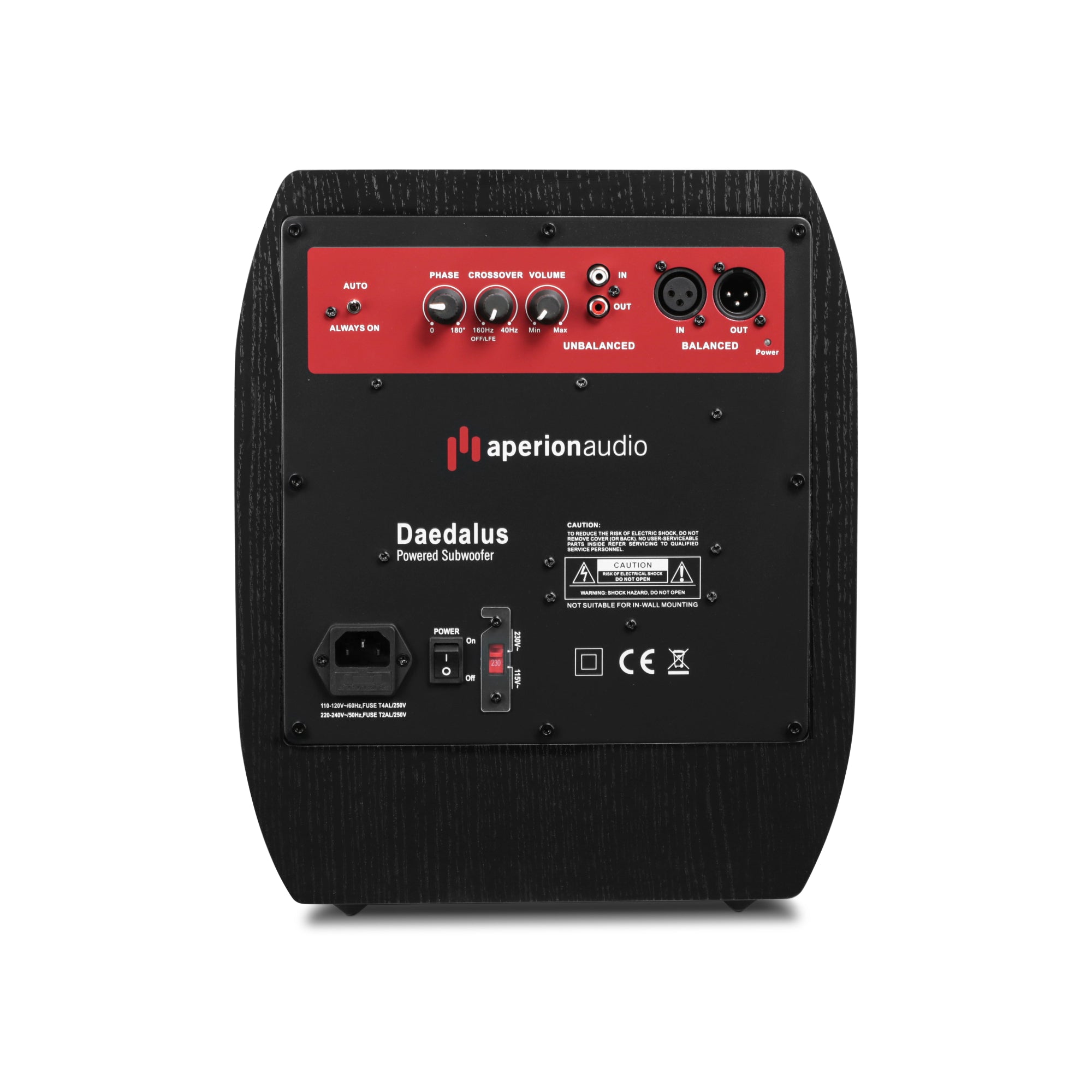
Getting to Know The Rear Panel
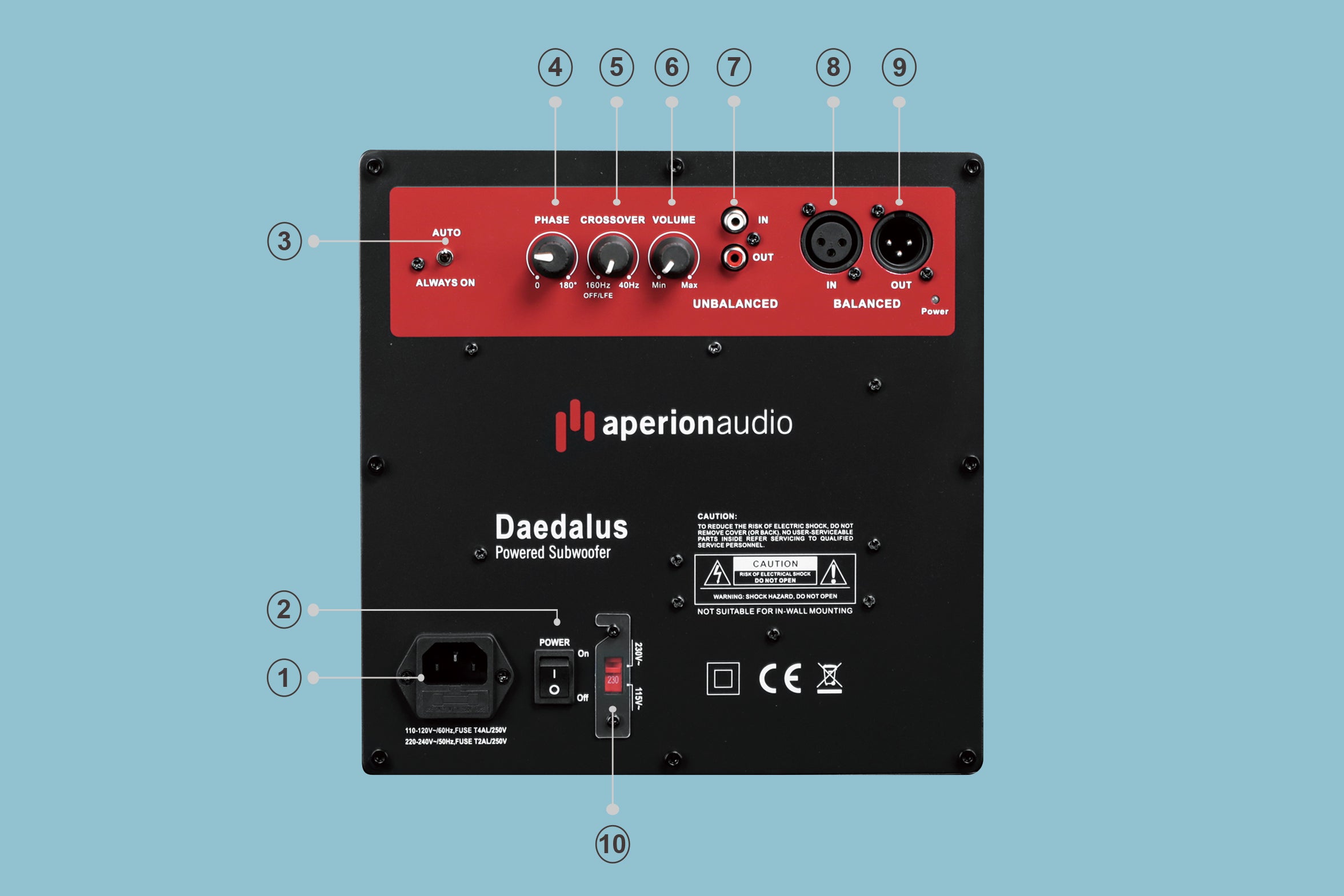
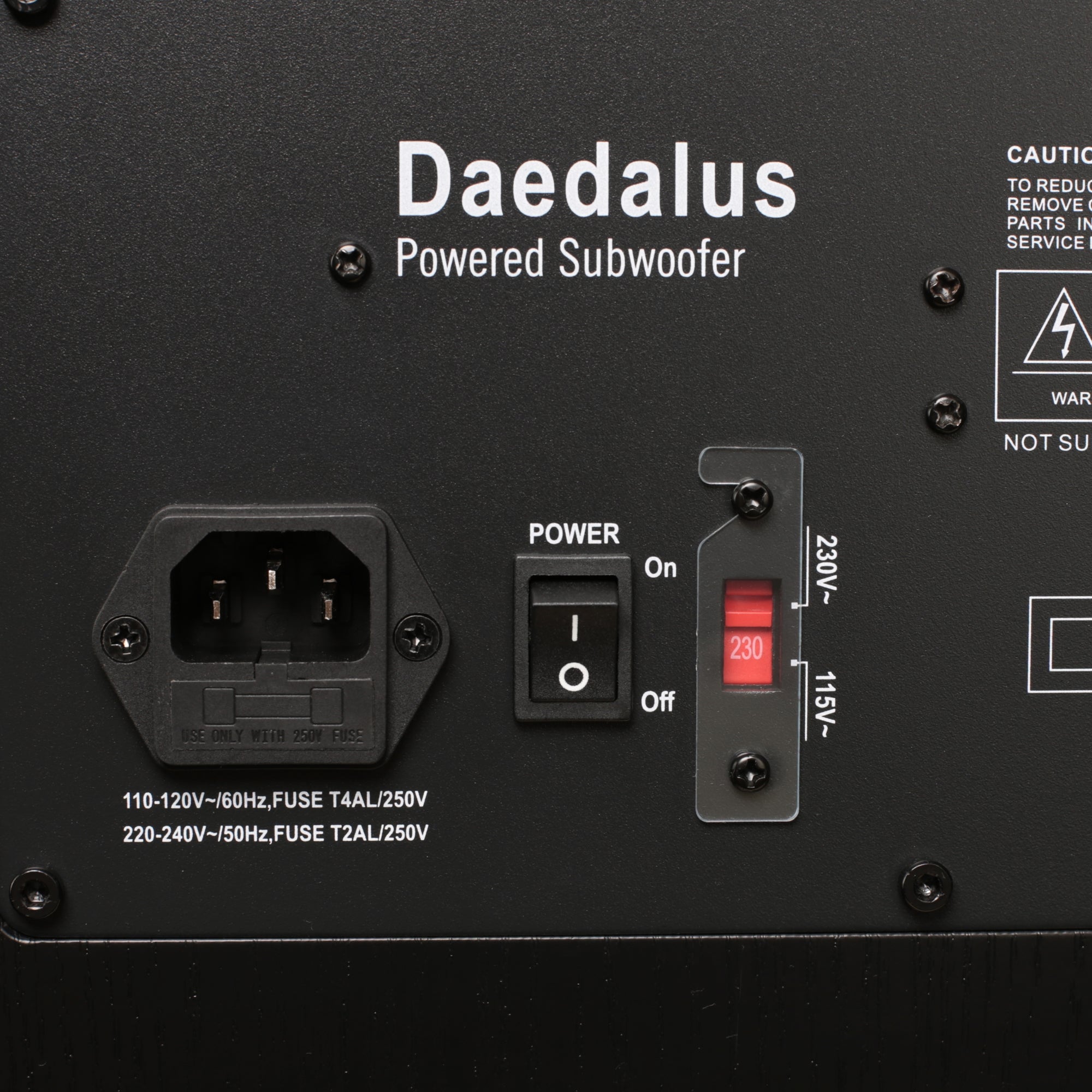
1. AC Power Cord Receptacle: A US standard power cord has a 3-pin plug with live, neutral, and ground wires. The ground wire enhances safety by carrying leakage current to the ground and reducing the risk of electric shock.
2. On/Off Switch: Turns Subwoofer On/Off.
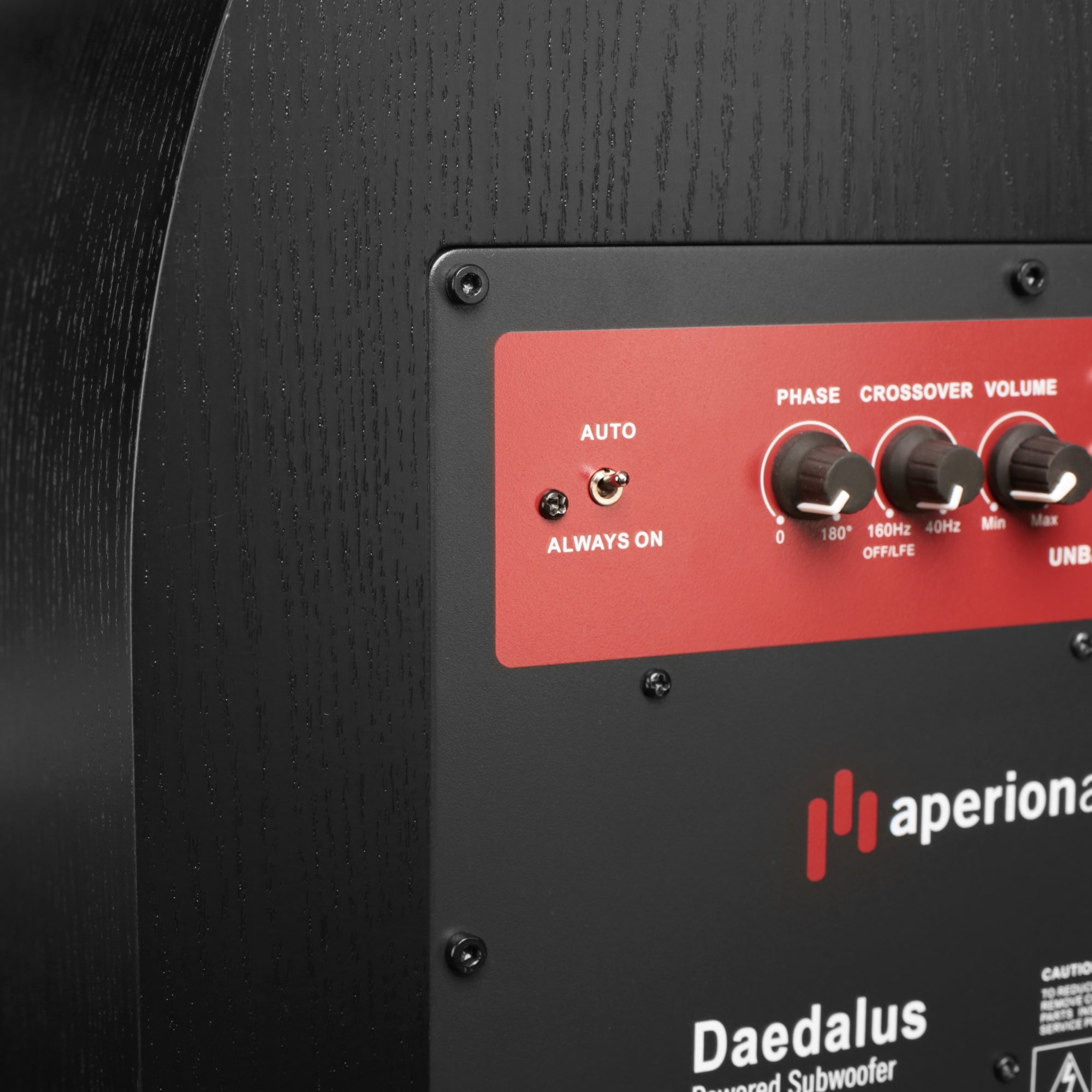
3. Auto & Standby: When set to Auto, the subwoofer powers on with an input signal and enters standby after 30 minutes of inactivity. In Always On mode, the subwoofer stays powered regardless of input.
4. Phase: The phase adjustment knob optimizes the phase relationship between the subwoofer and main speakers, improving low-frequency response and system integration while accommodating different speaker positions.
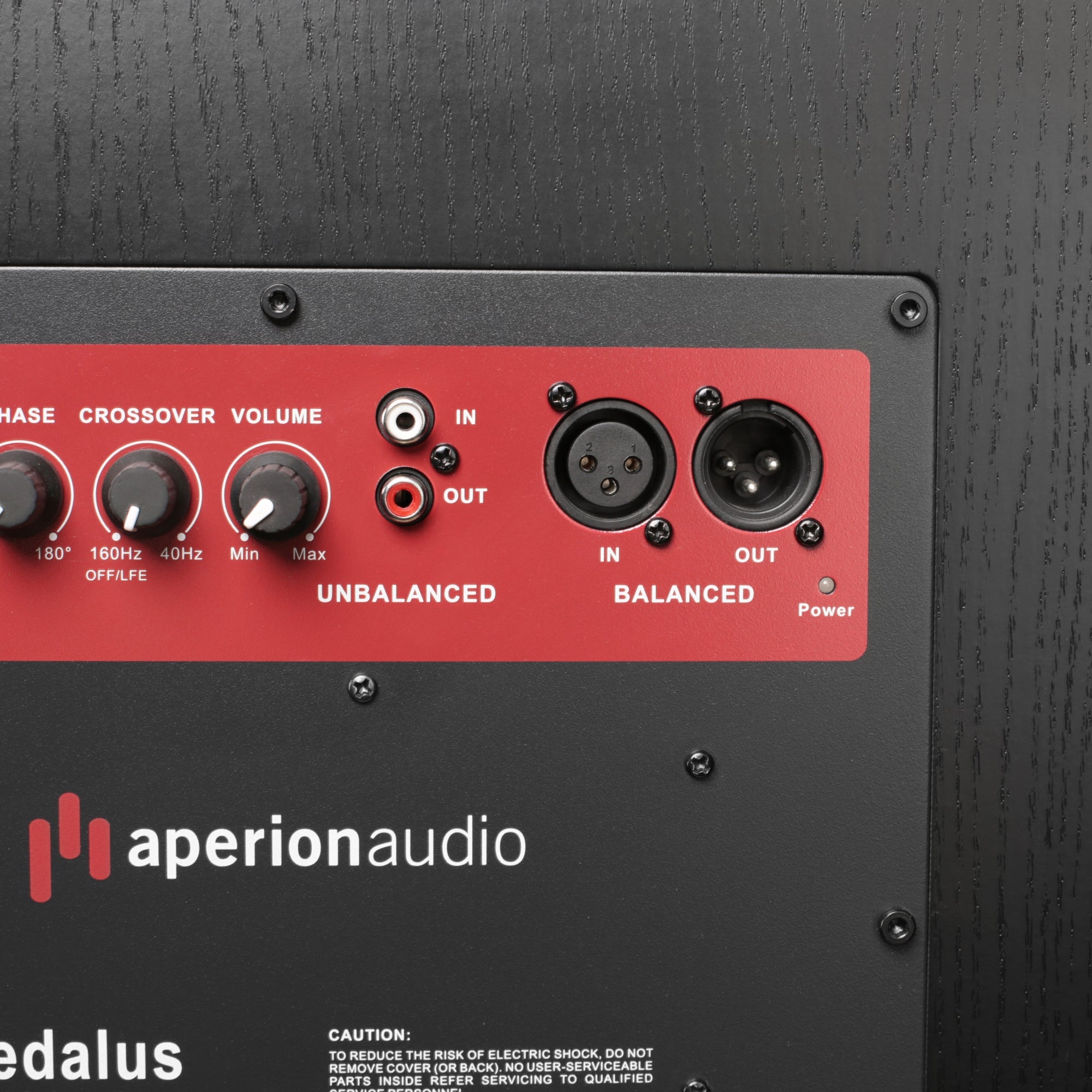
5. Crossover 40-160 Hz & OFF/LFE: The crossover adjustment knob lets you control which frequencies the subwoofer processes, ensuring better synergy with the main speaker and reducing sound overlap.
Setting the crossover point to 80Hz means the subwoofer handles sounds below 80Hz while the main speaker handles those above. If your AV receiver has a separate LFE output, set the crossover knob to Off. This allows the RCA input to act like the LFE input, managing low-frequency signals without using a subwoofer crossover, ideal for home theaters.
6. Volume: Adjust the volume.
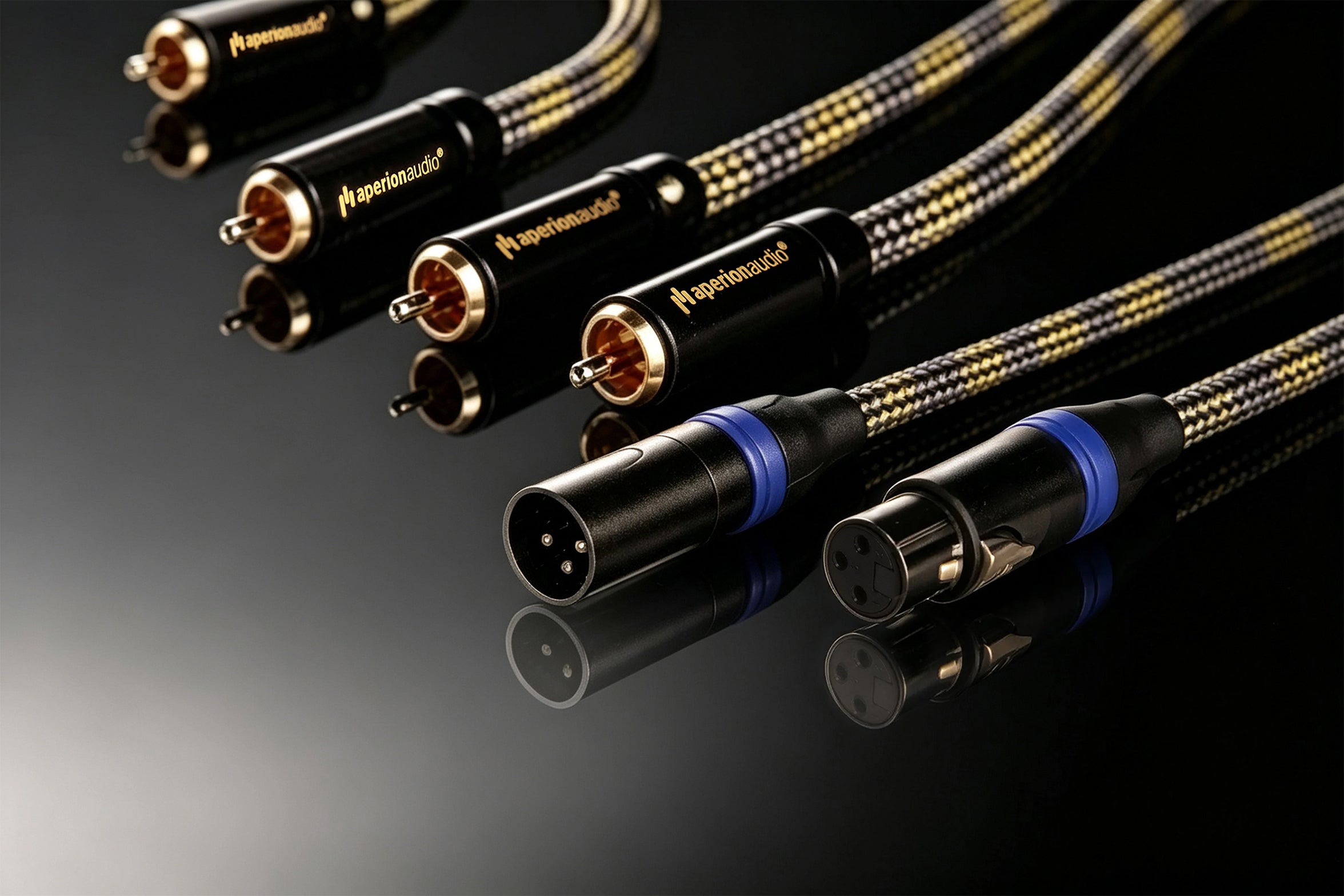
7. Unbalanced (RCA) line level input & Unbalanced (RCA) line level output
8. Balanced (XLR) line level input
9. Balanced (XLR) line level output
10. Voltage Switch: Manually adjust the voltage of 110-220v.